In a high school environment, some people seem to have an awfully easy time getting work done on time, even though their outside lives are packed with parties and dinners and close to no time to get any homework done. It’s impressive from the outside, and it’s easy to wonder what their secret to productivity is. As it turns out, many students aren’t even bothered to do their own work. Around the classroom, tabs of ChatGPT are quickly closed when a teacher walks by, then opened again so that the student doesn’t have to come up with their own answers.
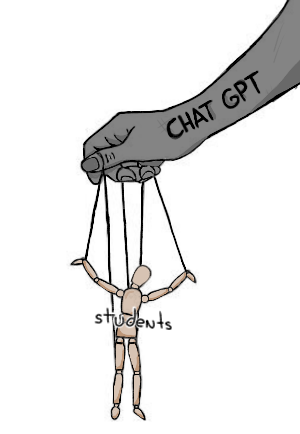
Artificial intelligence, or AI, seems like a savior for some people. Who wouldn’t turn down the chance to get out of a couple of assignments? It’s tempting, certainly. Saving time by having a robot do work may sound ideal, but after using that tool once, it becomes hard to pry away from. The grip of artificial intelligence keeps a hold on the minds of students as an easy solution to classroom stress and pressure to do well.
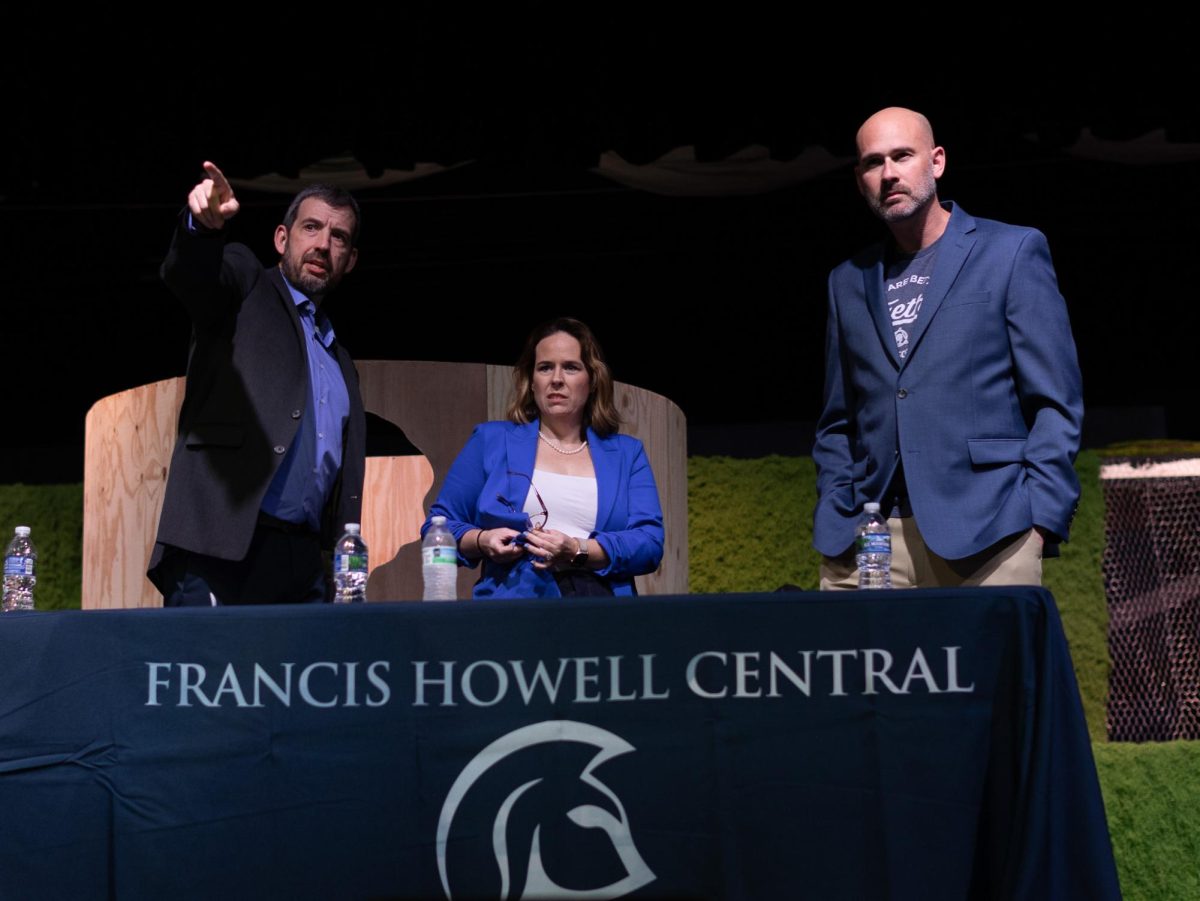
Mrs. Kellie Staback, biology teacher, believes AI may be here to stay, so students will need to figure out how to be responsible with its use.
“My fear is that people who rely on AI too much are going to go through school and then college where they are not actually retaining anything,” Staback said. “And then you get out in the real world in the field that you chose, and you have no idea what you’re doing.”
It doesn’t feel like a big deal until a medical residency program is filled to the brim with recent graduates who can barely name three parts of the brain. A music major who can’t remember a basic scale structure, or someone studying history but doesn’t really know any time period other than the one they’re living in.
On a more individual level, AI acts as a crutch. It’s something to fall back on if a snag is hit in the work. When a student uses AI, it eventually becomes the only thing that they can depend on.
Freshman Lainey Walker, in an environment where many people use AI on a daily basis, notices just how many of her peers rely on AI in their everyday lives.
“You’re losing your critical thinking skills, your problem-solving. And then it’s becoming so normalized,” Walker said, with a frown. “So for the coming generations, it’s gonna be just as big, if not bigger, a problem, because so many people are already using it.”
Originally, any and all answers came solely from a person’s brain. Once the Internet was developed, it was already hard enough to separate what truly came from a human brain and what came from the web. Now that AI has been introduced to society, being able to detect what has been fabricated by a robot is close to impossible. As AI advances even further, teachers have had to take extra measures to ensure that students are using their own thoughts.
“When I first started teaching, AI was nowhere on my radar. I mean, we had to deal with Googling things and things like that,” Staback remembers. “I’ve had to change the way that I structure my grading as well. Turning plagiarism reviews on and using AI detectors and things like that to make sure that there is fair grading and everybody is doing what they’re supposed to be doing.”
Similar to a virus, AI spreads. When a student hears their friend mention how much their grades have gone up because of an AI tool, it creates a spark inside their brain. If AI can do all that, who wouldn’t want to use it? It’s only a matter of time until a whole school eats, sleeps, and breathes AI.
Without regulation and knowledge of what artificial intelligence truly does to a person’s brain, its grip only grows stronger. With every person who logs onto their ChatGPT account, the human population sees a decline in creativity and real thinking. It’s very easy to overlook AI’s terrifying but consistent growth when its benefits are put up on a pedestal and shoved in society’s faces as “the future.”
“My hope would be that the education system, if this is something that is gonna continue to be a big factor in education, that there would be a class on AI,” Staback suggests, “where students can take the class and learn how it actually works, and what it is capable of doing for them.”
In high school, teenagers are excited to keep up with whatever the newest thing is, whether it be clothes, trends, or technology. While the potential of AI is undeniable, a line must be drawn for how much it’s allowed to do. The future of AI is up to everyone – will it maintain its grip on society, or will it back away?