Some books shouldn’t be read by people of certain ages. It’s a simple fact that no adult or young adult who knows better would dare give “A Court of Thorns and Roses” or “Fifty Shades of Grey” as a birthday gift for tiny, 10-year-old Timmy, who thinks holding hands is the equivalent of marriage. But once those kids get into high school, who decides what’s best for them? Is it the people who raised them, is it the teachers who know from years of teaching what most students can or cannot handle reading, or is it the maturing, empathetic mindsets of the students themselves?
“I can empathize with why it is that some people think some books are not appropriate, but I don’t believe that one person or one group of people should be making that decision,” said AP Literature and Composition teacher Sarah LaRue, “Especially when everyone has different life experiences.”
LaRue has been teaching English for 13 years, allowing her to learn about the interests and opinions of students toward what books they enjoy reading. While she does not support book banning, she does believe there should be some form of regulation.
“There are some books that I don’t think our kids should have access to at school, like ‘50 Shades of Grey.’ There has to be some sort of educational value [in the books libraries provide] if we’re tying it to a school,” said LaRue.
Even students with a strong passion for reading have to admit that certain books are not appropriate or comfortable for most students to read.
“I think it’s certainly acceptable. There are some books that are definitely not for certain age groups,“ said Junior Amelia Heidt. “ I don’t think a 4-year-old or a toddler or even an elementary schooler should be reading adult content or books that clearly aren’t appropriate for them.”
However, book banning in general is unacceptable to Heidt. Not for selfish, personal reasons, but for the sake of her peers’ education and supporting their freedom to read when resources are limited.
“I don’t support book banning in general, because I think it’s really important for everybody to be able to get as much of an education as they can, and I don’t think you can learn about certain topics if the information is unavailable to you,” Heidt said. “Especially because a lot of people can’t afford to get books on their own, and a school library or a public library is the only source of information for them.”
The school tends to agree with these statements to an extent. In the district policies of the Francis Howell School District, policy 6310 states that books with “explicit sexual content,” as well as “alcohol and drug use” cannot be provided in the district libraries. However, while there is no controversial book, such as “To Kill a Mockingbird,” that is officially banned by the board and community, specific books can be challenged by both librarians and the community.
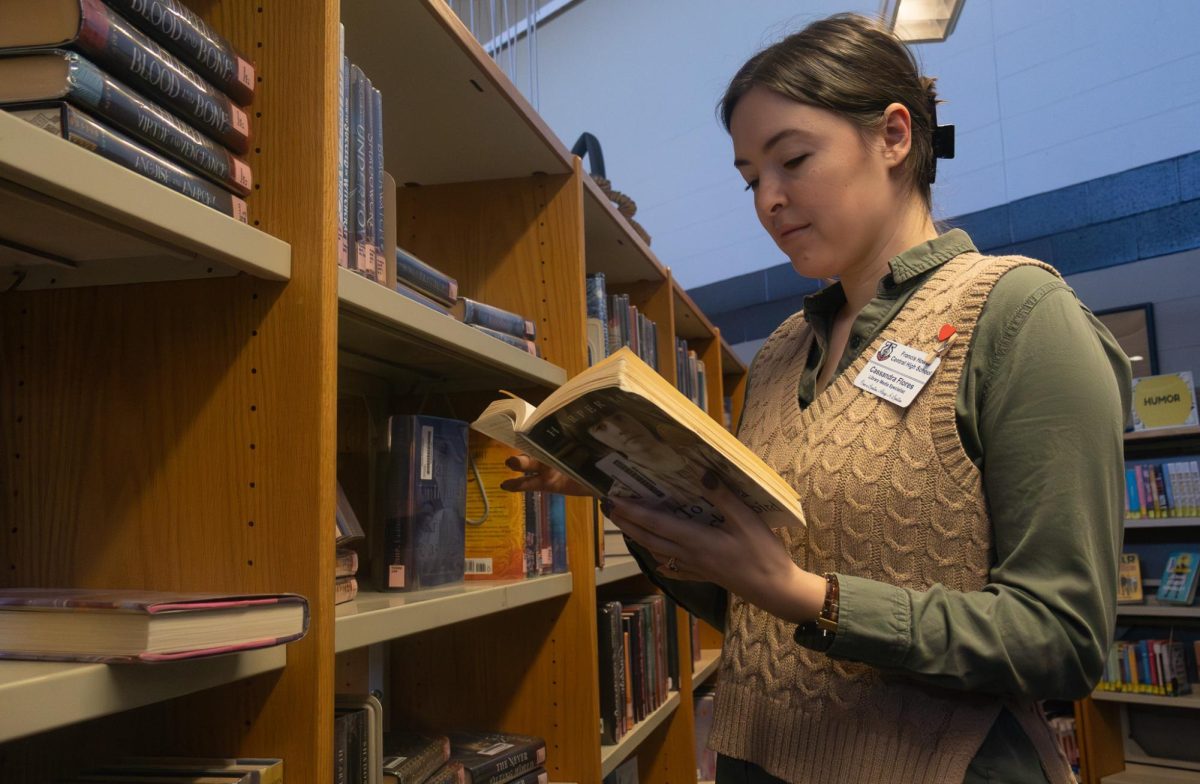
“With this new policy, as librarians, we can decide, ‘Hey, maybe we think this book doesn’t fit this policy,’ or we’ve had it for a while and are kind of reconsidering it. Or it can go to the formal challenge process,” said librarian Cassie Flores. “A parent or community member in the taxpaying county can then send in a form [saying], ‘This is the book that we want to challenge. Here’s why,’ Then they’ll go through a whole process where they’ll bring in a group of teachers and community members to read the book, discuss it, and determine if it’s allowed to stay or not.”
Throughout the lives of Flores, LaRue, and Heidt, book banning hasn’t had much of an effect on the books they read in high school or what they choose to read now. For this reason, many do not perceive book banning as a district being overprotective of their students or as an abuse of their rights
“I can’t say I’ve been personally affected by book banding. I feel like, in general, our school library and our public library have a wide variety of books. Maybe it’s just that I haven’t noticed that I’ve been affected, but I’ve been able to learn about different perspectives and read pretty much any book [I’ve wanted] to throughout my life,” Heidt said.