
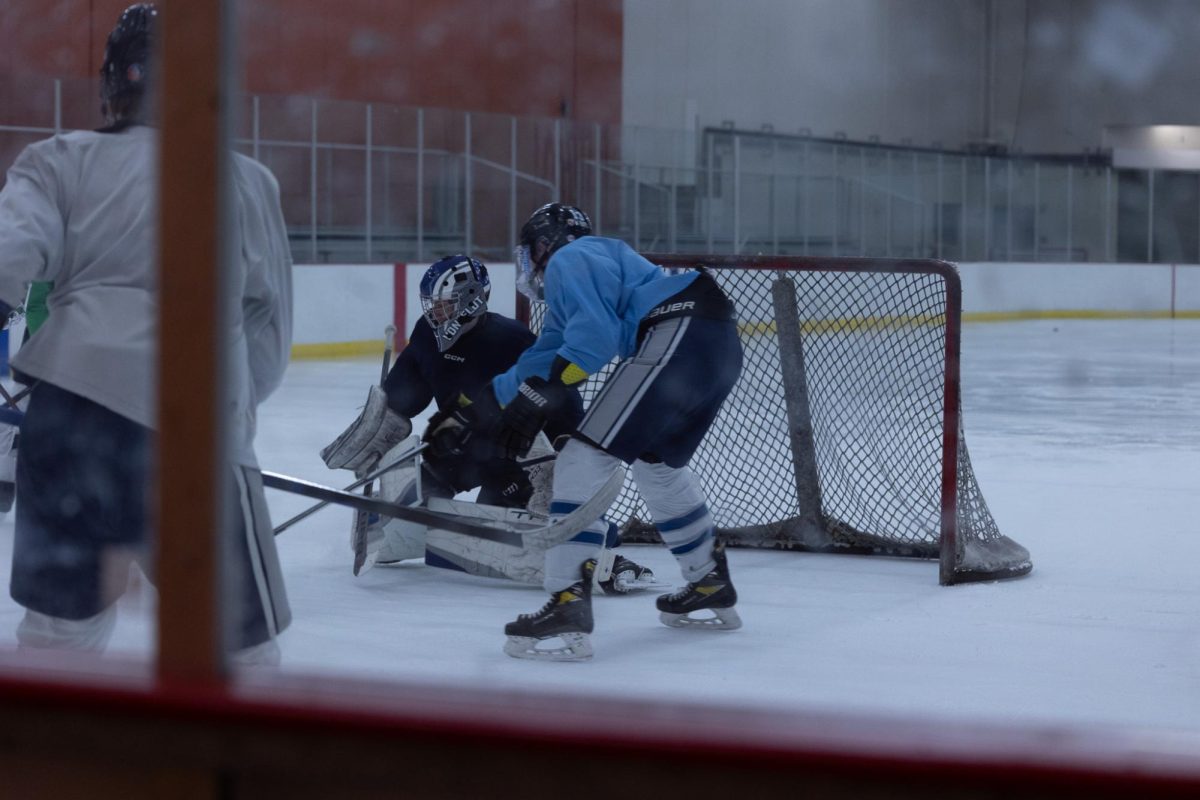
The droplets of perspiration trickled down the student’s face. The heat rose with each move, and the body tensed with demanding positions. ‘Thump! Thump! Thump!’ raced the heartbeat as the ice hockey goalie, from the FHC team, prepared himself to make the most formidable move that could define the fate of the game. And not just with ice hockey, this scenario is similar to each delicate move on the ice during figure skating. But, one thing is for sure: these games parallel the most legendary and glorious [drumroll please]: The Winter Olympic Games. And the difference? The normal school tournaments, generally played in districts, bring out a rather soft competition side, while the Olympics are filled with the glorious gold medal, glistening with topmost pride, honorably worn on a single neck; the shocking amounts of profits that grant unimaginable richness, plus the unavoidable international fame. But, the FHC students aren’t backing up just because of that; they always bring a story to tell, one that strings the pearls of memories, skills, and failures.
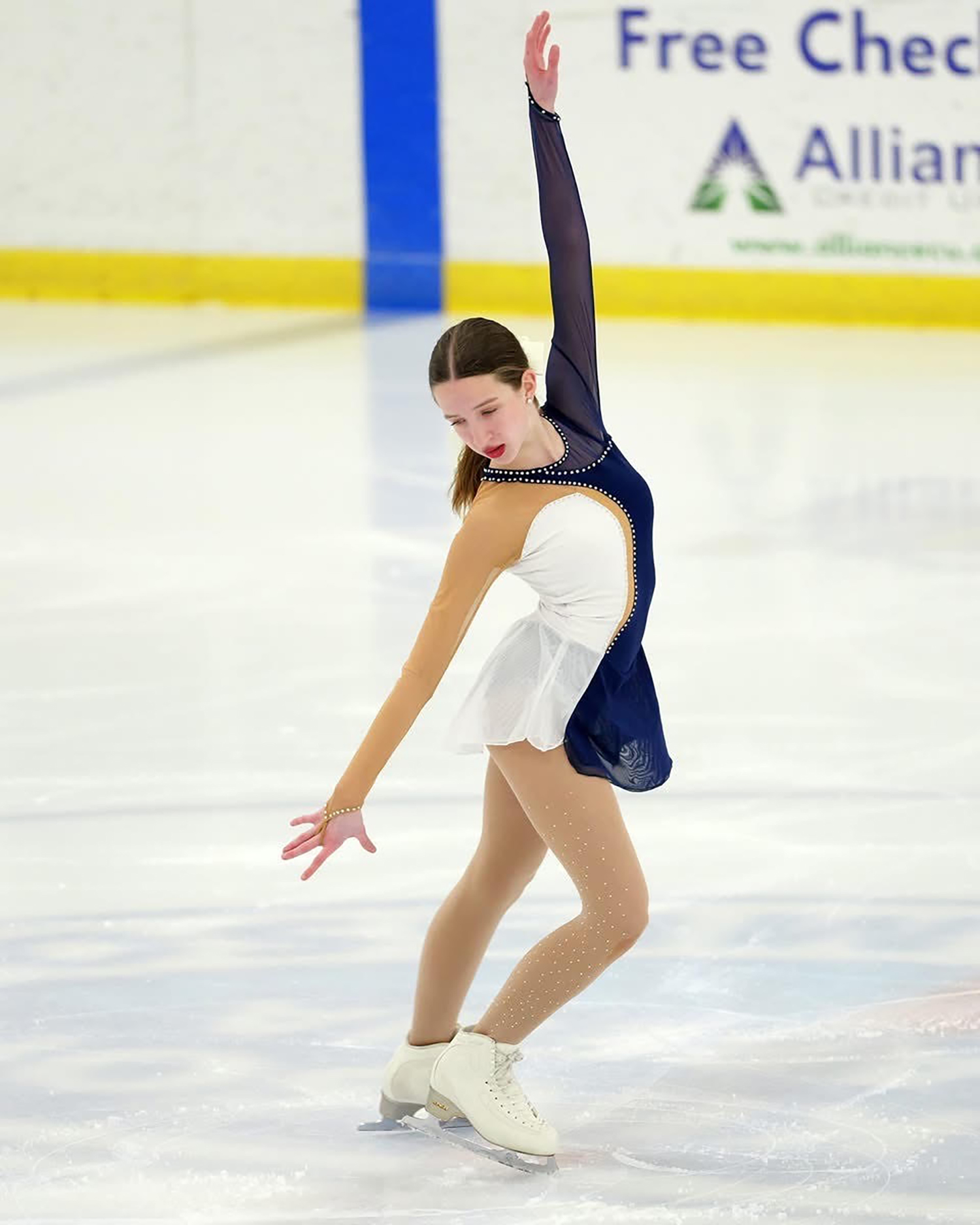
“I started [figure skating] when I was eight years old. [My attention got instantly hooked] when, in 2018, I was at home, sick, and I was watching the [figure skating] Olympic Games live. That’s when I knew that this was my [dream] sport,” Claire Bess, a junior, said.
Her story started from the beginning of her childhood, bringing forth the love she had developed for the Games over the years. She was deeply drawn to it; figure skating taught her precision, and she made family by attending practices. Senior Tyler VonFeldt, though, started his journey a different way.
“I grew up around a big sports family, so I was naturally inclined toward sports. But, as my cousin played [ice hockey], I was interested in trying it out, and it felt amazing,” VonFeldt said. “[It became an important piece of my life], and from then, I knew that my goal was to try to get better every time I stepped on the ice and use the stick [to] protect our team’s net.”
Many students choose a sport related to the Olympics because of their family background and environment. With the family bonding around the TV early in the morning or in the late afternoons, the screens show off the sports played by the Winter Olympic teams around the world, competing. It’s true, though, that many students feel inspired while watching the US teams (such as the Blues) dedication and performance while competing with other teams around the world.
“[The] Blues were really inspiring when I was little. I started playing hockey in the third grade. That’s when I really got into watching the Blues and supporting them. From watching and getting inspired, [I] learned to skate and how to stick-handle the puck. [This] was and [always has been] really, really fun and inspiring,” Dimitry Babey, a senior, said.
With the inspiring teams of the country, many students feel inclined to join the sport by participating in clubs to experience the taste of victory and teamwork. FHC provides the Ice Hockey club, where teams practice regularly to bring forth their best efforts.
“Usually, [our team practices] on Mondays, Tuesdays and Thursdays. We mainly practice [drills] of our sport at the Rec-Plex building [even in summers]. And, with all that [it’s really] fun. I’ve made some of my closest friends through skating and it’s also a time when I don’t have to worry about anything else.” VonFeldt said.
Winter sports aren’t meant for summer, but students still practice ice hockey and figure skating at those times by going to the Rec Plex, which grants them access to ice rinks.
“Being indoors and in the summer doesn’t make much difference. [For ice hockey], it’s not as frequent ice time, and [we] have to pay a little bit more as well [to] maintain the ice in the summer,” Babey said.
Besides ice hockey, figure skating can be practiced in the summer, where students practice it among the ice rinks in the Rec Plex center with the help of experienced coaches. They teach the necessary postures and the key to balance. But sometimes, it becomes challenging for student skaters.
“The problem with my rink is in the summer. Sometimes, the building officers melt the ice for roller hockey practices. I do have to go practice at other rinks, but my skating season is generally all year round because it’s indoors, and yet the seasons sometimes affect my practices,” Bess said.
With practices being mandatory, many ice sports around the district are held at the Rec Plex. Prices also increase when summers arrive to help with maintenance purposes and participation rates. Many coaches put the extra money into the registration fee. But, besides all the fees, the connection between normal school sports and the Olympics contributes greatly to the students’ unique experiences. Playing sports with friends and memorable coaches leads to cheerfulness and satisfaction. The inspiring Games lead to bold goals. Many students aspire to either play in college to improve or play in the real-world Olympics.
“Definitely, if I had the chance, I would play in the Olympics and even play in college. [For some reason, this is what] my younger self would have wanted to do and dream of attaining,” VonFeldt said. “[And besides], it’s my own teammates. My friends that play ice hockey, the connections, and the memories formed [create a world for me and my game].”
Besides the Olympics, friends light up the moment and inspire the players to grow their skills in a sport. Tears of joy after achieving something big with the team fill the heart with memories. Many stories, friendships and accomplishments start when students grow in their journey of becoming athletes. Not only does it help them physically, but it also helps them emotionally.
“A lot of it is just doing it with my friends. I’ve made some of my closest friends through skating [even without a team], and it’s also a time when I don’t have to worry about anything else. I just have fun [with] friends from other schools or homeschool,” Bess said. “My best memory was last July when I went to Minnesota for a world’s competition with my friends and [I] got to be with all of them for the whole week and had fun.”
While Olympic sports increase motivation and have many positive effects, they also work as a stress reliever when students play. The sport also raises expectations, though, and the importance of certain values.
“The skills that matter the most in playing any sport, especially ice hockey, are communication, leadership, teamwork, balance, speed and pace of the hockey, doing things on time…and definitely, being a happy individual and being overall a good person and being a good teammate. [And, most of all:] not trying to do what’s best for you, but doing what’s best for your team,” VonFeldt said.
These key characteristics help one in life and in the future, and they improve gameplay. Despite the profit it grants, students often feel a need for more support from others while they play in Olympic tournaments. Besides that, students often perform better while experiencing real-life situations and a glance at a real-life Olympic athlete.
“Honestly, I want [the Olympic players] to teach me better moves and develop that energy on [the] ice. Even if we have different standards, I want to learn [the motivation] to be more competitive at ice hockey,” Babey said. “[I want to learn to] always exceed the standard, and show that standards can be broken.”
While the Olympic players can teach the students more, the game itself feels like a coach driving down important life lessons. Many students learn to perform better by having good teammates around, while others learn to move on from the failures of losing games and committing mistakes, or even controlling themselves during times of emotional rollercoasters. Everybody is still learning, no matter if it’s the all-time famous Olympic player or the normal student-athlete.
“You’re always learning more, and it’s never a time where you say that you have become [the] master of the sport, because you’re always growing,” Bess said.


