


When Missouri lawmakers passed a sweeping ban on student cell phone use this year, they promised increased focus and fewer distractions in the classroom. The policy has, in many ways, delivered that goal, but it has also introduced new challenges as students and teachers navigate definitions of “educational use” and the realities of a technology-driven curriculum.
At FHC, some teachers had noticed benefits, but they also see strict limits that don’t always align with student needs. Brittany Williams, who teaches Algebra 1 and College Algebra, said she has seen students’ attention levels rise with the phone ban.
“I feel like I’ve got a lot more engagement with students this year, because they’re not staring at their phone instead of listening to me,” Williams said.
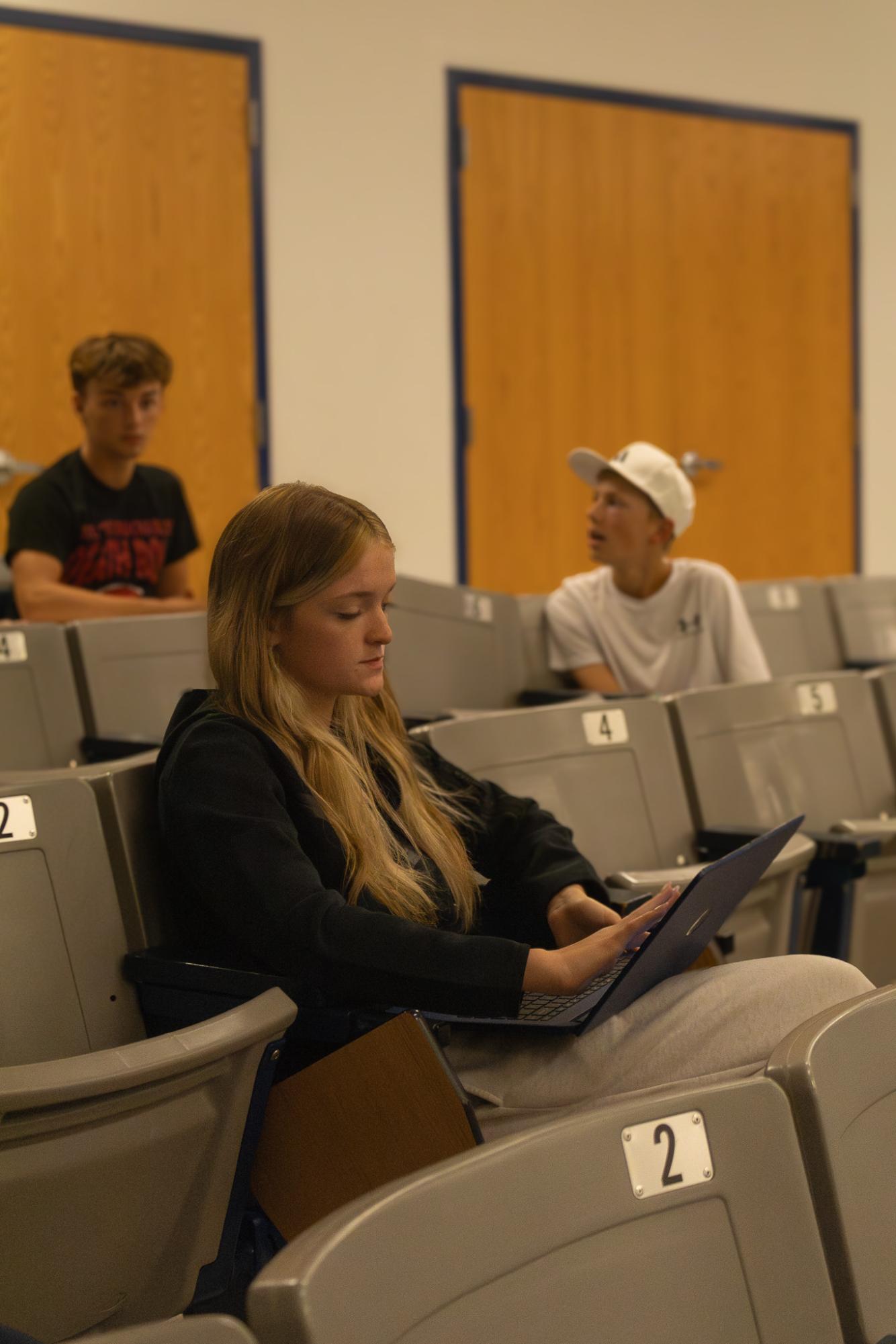
While the law eliminates most personal device use during the day, Williams said she often relies on technology in her classroom. Students snap photos of assignments to turn them in or take notes on their iPads or laptops. Still, the rules seem a bit hazy.
“Since it’s so new, it’s a little bit of a gray area, so I think a lot of teachers are just erring on the side of caution,” Williams said. “By allowing a student to do one thing, does that mean they’re just gonna assume they can do it all the time and cause an issue?”
For AP Government and contemporary issues teacher Nicholas Beckmann, the issue extends beyond classroom management and into questions of governance.
“There are two different issues at play,” Beckmann said. “One is the actual phone ban, which I am in favor of. I think that it has shown some good stuff in class, and the kids are more focused when they should be…On the other hand, being a government teacher, I think it should be done at the most local of levels, because every district is different.”
This brings into play how the legislators’ rigid framework does not account for everyday realities, such as students using phones for study platforms in free time, grade portals, or even noise-canceling headphones during quiet work periods.
“By law, is that content-based?” Beckmann said. “Those are questions that, again, this is why I think the school board should enact it, and not the state, because there are so many different things going on at the school, and I don’t think state politicians understand the same things that the school board would.”
Interim principal Dr. Rob Gaugh echoed the concern that lawmakers overlooked nuance, particularly at the high school level where students often juggle work, athletics, and college courses alongside traditional academics. He noted the policy that the school board was planning to implement before the state-wide phone ban got enacted.
“We were developing a plan where students had access to their phones during lunch, during the passing period, which would have made more sense,” Gaugh said.
Gaugh described situations where the ban conflicts with the practical demands of modern education: dual-enrollment students unable to access Canvas, digital art students reliant on iPads, and QR code sign-ins for guidance and flex days.
“There are a lot of things that can be used effectively for education that I don’t know that the legislators really thought about,” Gaugh said. “It’s just things that, unless you’re in a system or in a profession where you don’t see it, you don’t really think about or know about it.”
Enforcement, too, remains uneven. Some teachers strictly write up any infraction, while others issue warnings. Gaugh reframes the practice as discretion rather than inconsistency.
“Fair and equal aren’t the same thing,” Gaugh said. “Everything doesn’t have to be the same and can still be fair.”
Yet even amid the frustration, Gaugh said most students responded with surprising maturity.
“I really appreciate how students perceive this because I think they recognize this is not the administrators whatsoever,” he said. “In general, kids have been really respectful about understanding…sometimes laws are put into place that you don’t necessarily like, but you’ve got to follow them anyway.”


