


Over the past decade, as technology has become more and more advanced, social media has become a near-constant presence, engulfing the lives of teens. For some, it’s simply a way to connect and stay in touch. For others, it’s a source of anxiety, noticing how easy cruelty lies behind a screen.
Junior Gwendolyn Baker says she uses social media sparingly, but even with limited use, the negativity is hard to miss.
“Pretty often, if you go into the comment sections of Instagram, it’s pretty bad,” Baker said. “I feel like it’s recent, because of the rise of anti-intellectualism, and people are so much meaner because social media has become a cesspool.”
Baker’s observation reflects a growing sentiment among students; the tone from online spaces has shifted from benign to toxic. Platforms that were once used to share moments with friends now amplify ridicule, misunderstanding, or mob-like comment sections. Many teens, like Baker, see this as a symptom of a broader cultural shift.
“I can’t imagine someone on MySpace saying, ‘You should kill yourself, ‘cause you don’t know how to spell something,’” she said. “If you think back to 2020, I feel like everyone was nicer.”
For Baker, social media’s shift from connection to confrontation has been enough to deter her from the apps altogether. Still, she admitted that even those who dislike the negativity can sometimes get swept up in it.
“[Sometimes] I like the funny comments that are like ‘You could ski on her nose,’” Baker said. “I was feeling hateful. I thought it was funny.”
Her testimony reflects another reality: online cruelty often blends into humor. What some see as a harmless joke has the potential to deeply affect someone else. For Baker, being on the receiving end of bullying in middle school left a lasting mark.
“I’m way more closed off from people … I pick and choose my friends pretty wisely,” Baker said.
Emerging trends like “bring back bullying” on TikTok have made this problem worse, encouraging people to ridicule others without accountability, another example of how online culture has turned hostility into a form of entertainment.
While Baker limits her online time, junior Mari Jones represents the opposite end of the gradient: a frequent user of social media who’s seen how normalized online hate has become.
“It’s been going on a while,” she said. “[Cyberbullying’s] gotten worse because people’s screen times are getting higher…there’s more social media apps and more people on their phones.”
Jones’ experience emphasizes an important link: as more time is spent online, opportunities for conflict rise. Increased screen time correlates with more exposure to judgment, comparison, and criticism. For many teens, the mirage of an overlapped online identity and real-life self-worth makes even small comments sting.
“I used to be really insecure, and I used to not post a lot on my social media,” Jones said.
Unlike Baker, who chose to withdraw from social media entirely, Jones chose to push through the cynicism, reflecting the growing awareness that while hate is common, it doesn’t have to define how you express yourself.
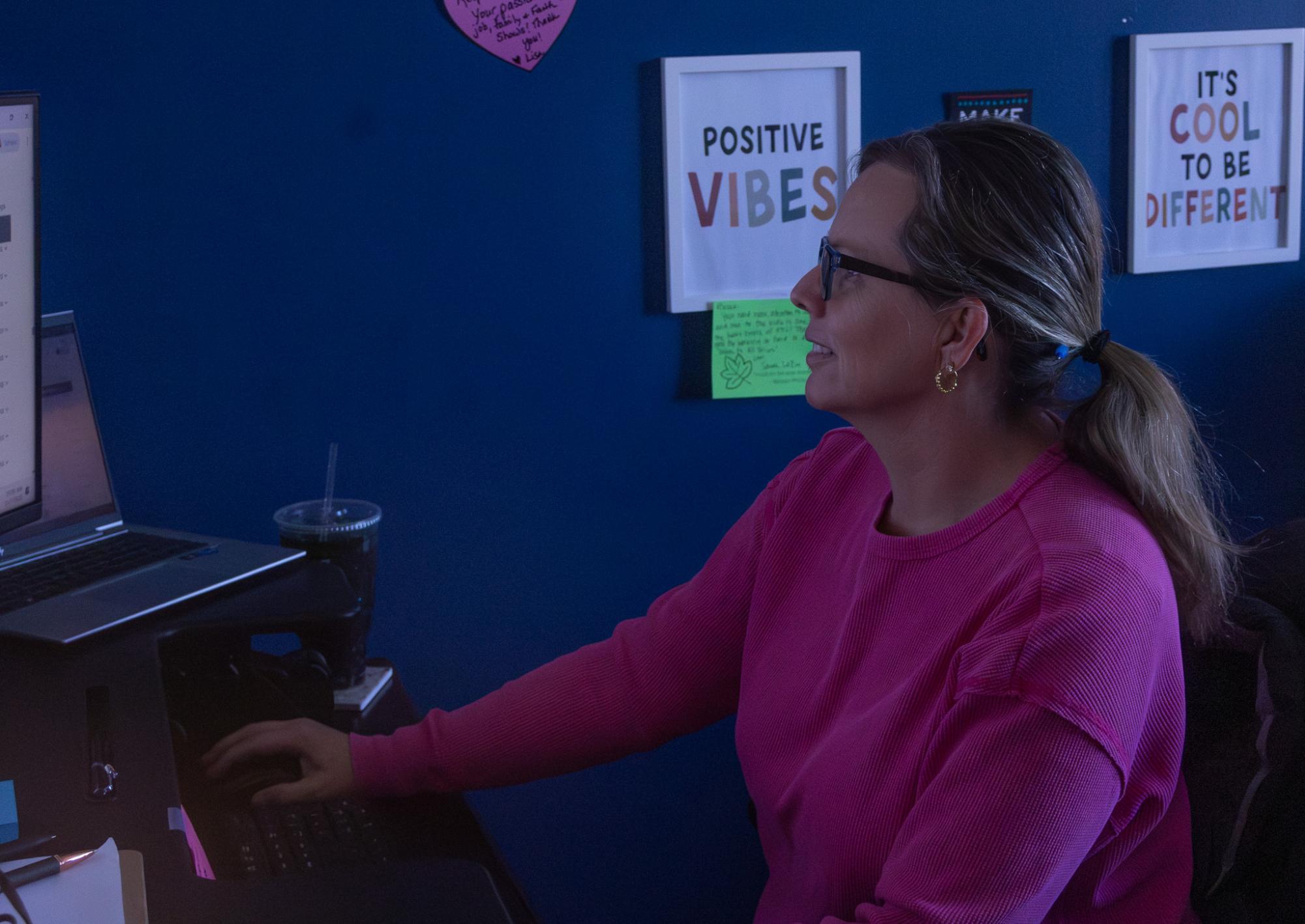
Counselor Mrs. Christine Russek said she sees the emotional impact of social media use reflected in her students’ behavior. While she doesn’t use social media much herself, she believes it’s created new challenges for communication.
“I think that students use social media to voice their opinions about other people versus talking with them,” Russek said. “Students don’t know how to confront one another, and that’s the platform to maybe say a comment, and then maybe it’s taken the wrong way.”
Russek said the anonymity and distance of social media make it easier for harmful messages to spread.
“It’s a way for people to not look someone in the eye … they can use words on paper versus personal interactions,” she said.
To reduce cyberbullying and the ongoing issue of negative online behavior, Russek said education is key.
“It’s really teaching students now that we don’t have phones in school; it’s great because they are talking to one another,: she said. “But cyberbullying is something that we definitely need to educate our students [about]. Joking and cyberbullying overlap with each other, and it’s something we need to teach more about to our kids.”
What students post, comment, and share doesn’t just shape their feeds; it shapes the environment they live in every day. At FHC, it’s a reminder that while social media connects people instantly, it also tests how kind they choose to be when no one’s watching.


