
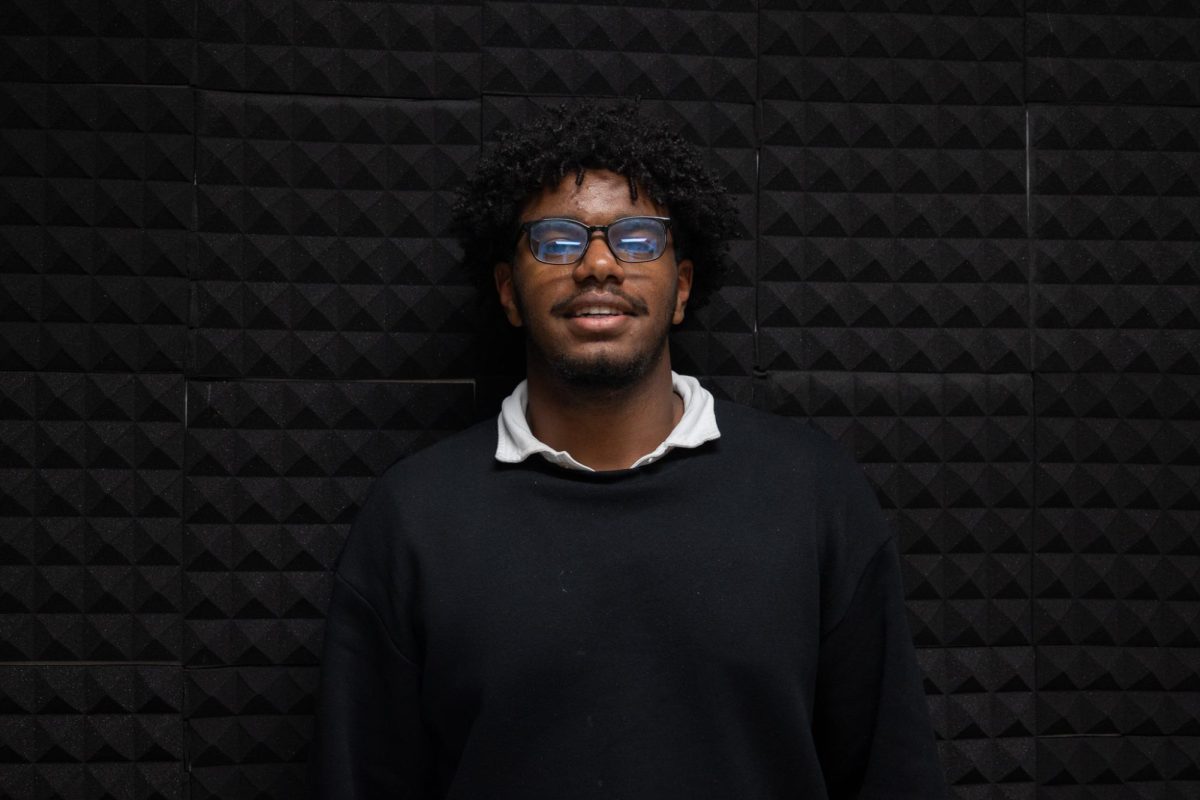

Hairstyles often have a powerful hold over how we view ourselves and how others perceive us. Type 4 hair, which, per Allure, is defined as “coily hair, commonly referred to as Afro-textured or kinky hair” where the strands “form very tight, small curls of zig-zags right from the scalp and are prone to major shrinkage” in specific has the capability for almost every hairstyle– straightened, braided, twisted, curled. That being said, people with type 4 hair typically have an in-depth care routine and hair preferences that are specific to them.
Preferring to wear boho braids, where the hair is braided in sections and individual curls are left out, senior Bella Cowherd maintains a specific schedule to manage her hair.
“Every couple of months (usually during the summer months) I get braids, and I redo them every two months. And then throughout the winter, I usually get a silk press and redo it about every two weeks,” said Cowherd. “I use mousse on my braids and oil, and then for a silk press, I usually just put oil in my hair.”
The process of prepping and braiding hair can be tedious; however, the durability of braids helps minimize the amount of effort needed to care for one’s hair in the following months.
“To style and wash it, if I’m taking my braids out, it probably takes about two-ish hours to wash my hair and blow dry it and style it. But if I’m getting my braids done, it usually takes five to seven hours,” said Cowherd. “I wish people knew how difficult it is sometimes to manage and take care of, [and] the time and the amount of work that you have to do.”
Although taking care of her hair can be strenuous at times, Cowherd makes an effort to keep her hair done—especially when it comes time for a special event.
“It makes me happier with myself, and it makes me like my hair more,” said Cowherd.
Much like Cowherd, senior Sa’Niyah Miller puts immense effort into caring for her hair. While Miller’s most common style is knotless braids, she most prefers to wear a sew-in and often experiments with various styles. Sew-ins require the hair to be braided to the scalp, where a needle and thread are then used to sew through the tracks; after the hair is sewn in, a flat iron is used to smooth the hair. When Miller’s hair is natural, the process is sometimes a two-man job.
“Mainly my mom does my hair…but when I wash it, I’ve got to detangle it [and use] so much conditioner. [I have to] part it,” said Miller.
She must double condition her hair in order to smooth the detangling process, which she completes with a curl cream. This process can take an hour to complete, yet box braids can take eight hours and upwards to finish. Once a braider has finished crafting their work, the ends of the hair must be dipped with hot water to seal the style. Despite the long time spent sitting, Miller enjoys the feeling that washes over her after a new hairdo.
“I love doing any type of braids,” said Miller. “When I don’t have my hair done, I just feel like ‘sigh’. I’ll be hiding, [saying], “I need my hair done right now.” I feel not myself…It makes me feel put together. It makes me look more [myself].”
Miller gets her hair done every two to three weeks, but she has run into some stylists that aren’t educated in properly taking care of Black hair.
“It’s a lot. [When] taking care of it, the thickness can also be a really big thing, because a lot of people don’t know how to deal with certain types of hair, especially our type of hair,” said Miller. “And I’ve been to multiple stylists that literally can’t even flat iron my hair the right way… I feel like they’re more trained in straight hair, like perms.”
According to Miller, the type of products used, heat level, practice, and styling techniques can play a large role in how a hairstyle turns out.
“[To take] care of it, do not put mousse on your hair every single day. That will ruin your hair. And then if you have boho [braids], when you tie [them] down at night, you have to do twists, so then they don’t mat up and get all tangly,” said Miller.
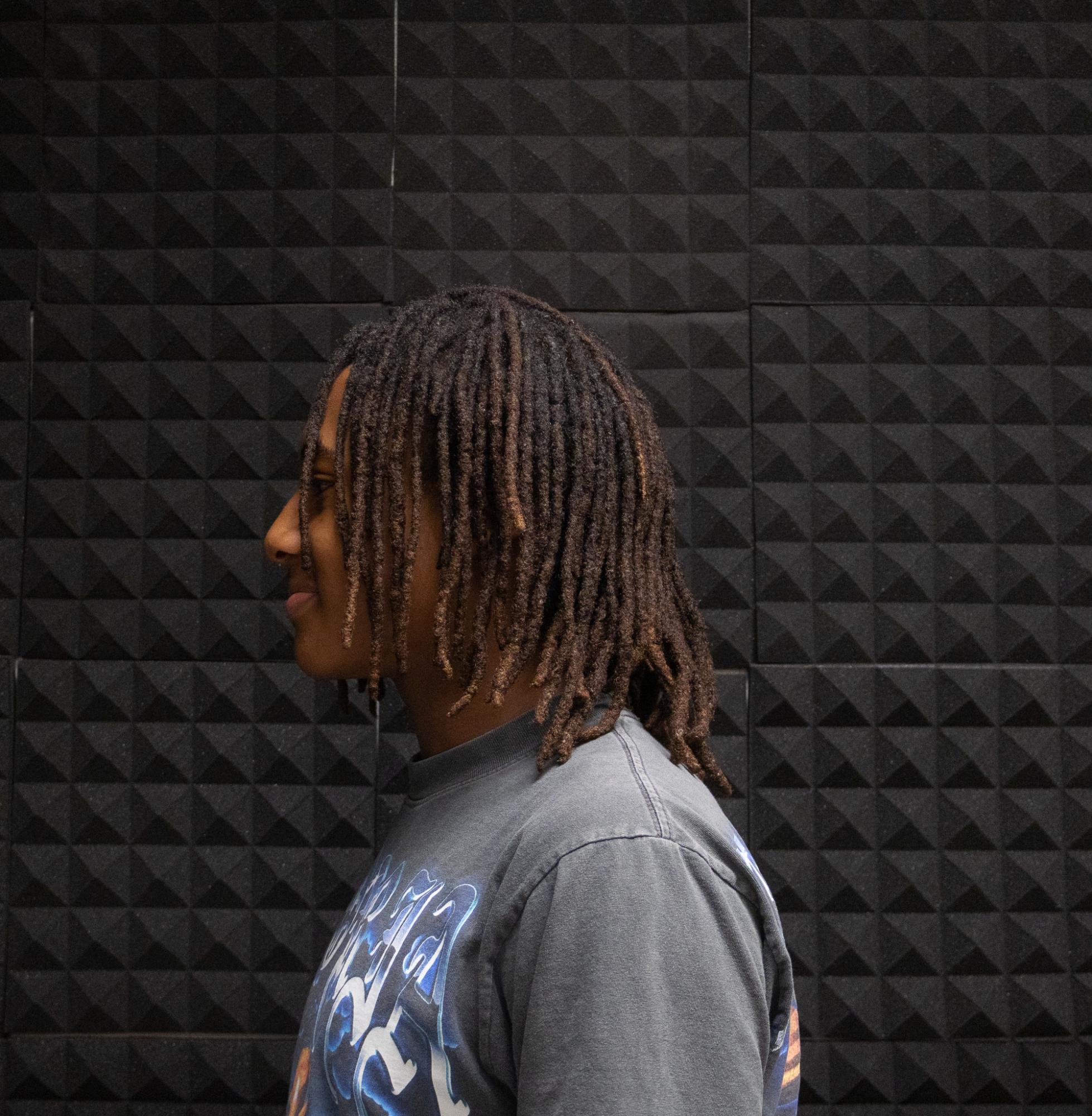
Although some individuals with type 4 hair find managing it a tough feat, some, like sophomore Davion Jones, wear specific protective styles to lessen the challenges that come with particular hairstyles. Jones keeps his hair in two-strand twists, which only requires a once-a-month refresh, which begins with a boil-and-shampoo cleanse. At a retwist session, each dread is parted and rolled to form cleaner lines. Washing his hair typically takes between 10 and 15 minutes, and the retwist itself can take two hours.
Jones notes that while some people comment about his physical appearance after his hair is done, a fresh hairstyle helps boost his self-confidence.
“Personally, I like it,” said Jones, “but some people are like, ‘Your forehand looks big,’ and I don’t really care.”
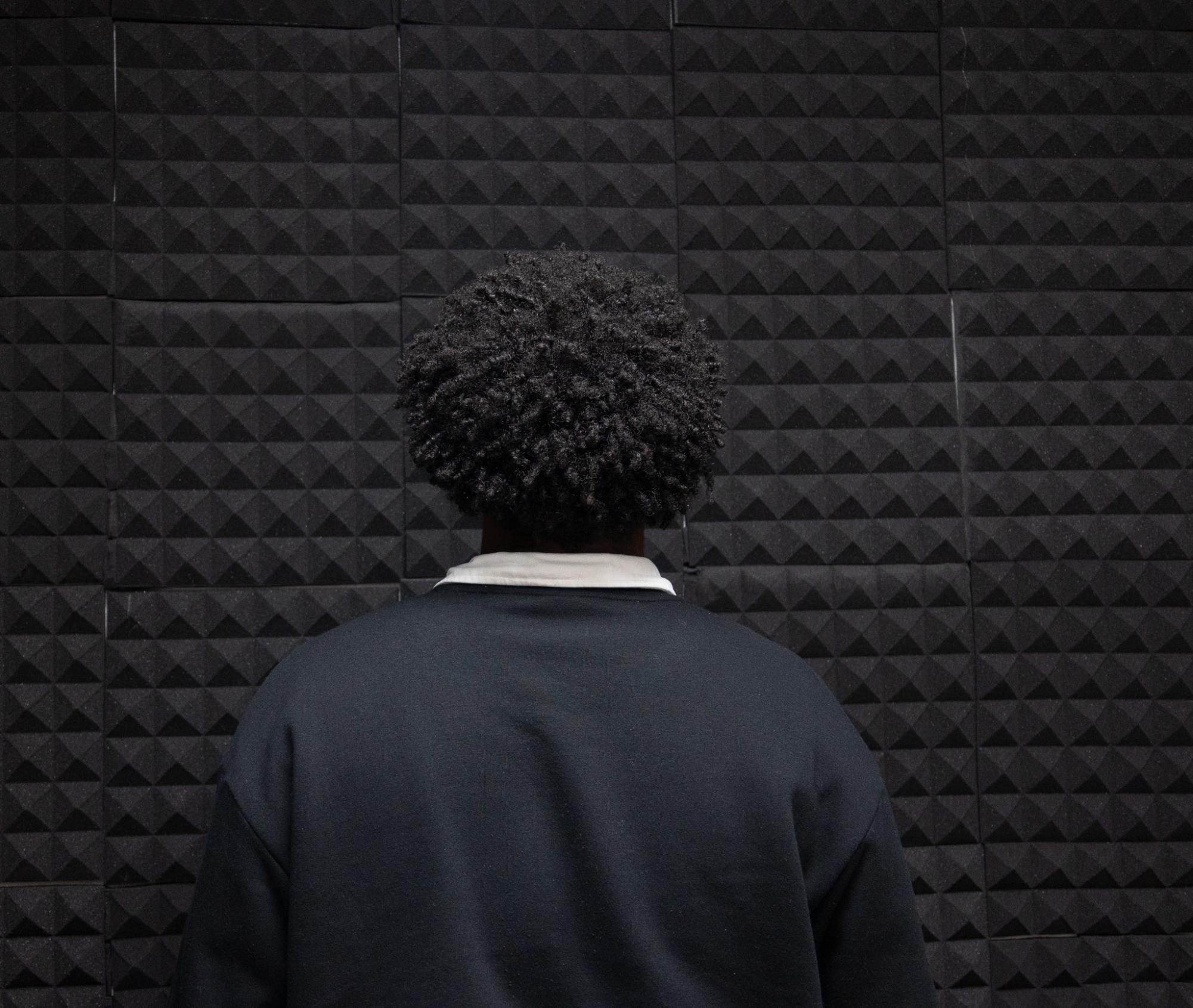
For senior Aymen Mohammed, embracing his hair in its natural state has defined his hair journey over the past year.
“Ever since I cut my hair, I like this lower cut. I used to do two strand twists [and] I used to braid [it] all the time…it was just so much work. And I used to finger coil, [and it was] so much work because I did it myself most of the time…But I think now, especially getting older, I don’t want to do a bunch of styles, [I] just like keeping it short,” said Mohammed.
Mohammed’s routine is specific, yet adaptable, in order to combat the effects of sports on his hair—typically only taking 30 minutes.
“Sometimes I’ll go once a week, sometimes I’ll go twice a week, and sometimes I’ll go two weeks before I have [a wash day]. I have 4a hair, [so] pretty coily.. Sometimes on the 3C side depending on how well I take care of it. I don’t use shampoo every day. I’ll condition probably three to four times a week, depending on how hard a practice is,” said Mohammed.
During football season, Mohammed makes sure to take extra measures to protect his hair from damage.
“My hair was shorter. Most of the time it would be a sweat problem if anything, so just [watering it] with the cold water, it helps take out all the bad bacteria and bad oils. The problem is [that] using warm water or hot water in the summer is really bad for your hair. If I’m about to go out and I’ve just been in bed laying around, I’ll…spray it with cold water mixed in with some rice water,” said Mohammed.
The temperature of the water used to wash and style type 4 hair often has a strong influence on the end result, which is why Mohammed strictly avoids using high heat.
“I’ll use only cold water. I take cold showers most of the time. I never let hot water or warm water touch my hair, because it just makes the frizziness a lot worse,” said Mohammed.
Achieving a high level of definition when styling his hair empowers Mohammed to feel more confident in himself.
“It keeps me more well put together,” said Mohammed.
Not only does his hair provide him with a sense of pride, but supporting local, Black-owned businesses helps Mohammed feel more in touch with learning about his hair.
“Besides Mielle, I don’t use any big-time brands at all,” said Mohammed. “…those types of people have my type hair, so they would know what works best …I trust them more. Supporting a Black business can only benefit me as much as it benefits them.”
Learning what works for him has aided Mohammed in building healthier hair; even so, it doesn’t come without its challenges.
“It’s not easy to take care of. You use the wrong product or you do something wrong…yeah, it might look good one time, or end up working another, but it’ll get worse and worse pretty quick if you use the wrong things in your hair,” said Mohammed.