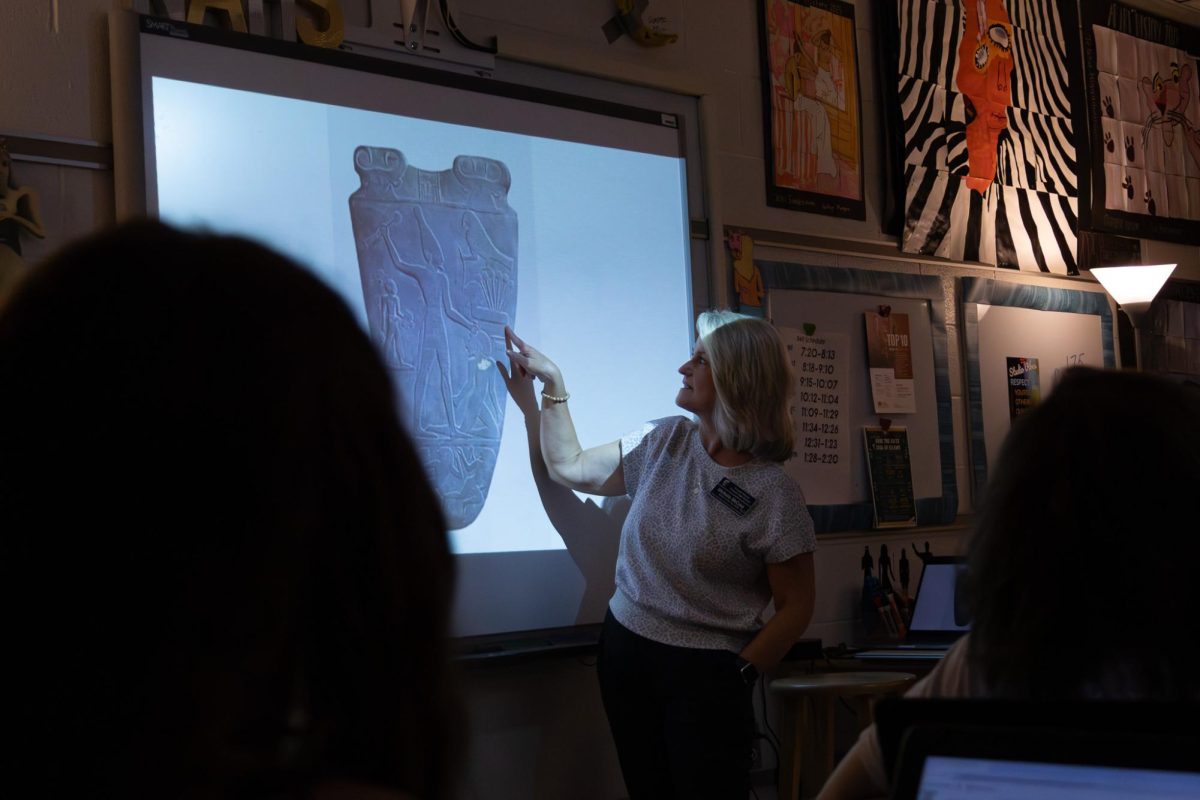
Before Art History students take their AP Exam in May, Mrs. Michelle McCune floats around her bustling classroom, offering plates for the pre-exam Panera bagels, passing out art-themed superlatives, and reassuring students with last-minute questions— representing the culmination of their growth in knowledge of art’s history since August.
At the start of the year, the course curriculum of AP Art History introduces students to a concept called “mastering the approach,” which aids in building the foundation of analyzing and understanding pieces of art. McCune has recently made changes to how she helps students grow their foundational skills.
“I’ve been really trying to have the class a little bit more active. We’re really heavy on academics and… note taking, but I’ve been trying to make the art come alive a little bit better,” said McCune.
Since she does not require homework outside of class, students planning on taking the AP test may have to do some extra legwork in order to be prepared for the exam in May. McCune also offers study sessions after school a few weeks leading up to the exam and online study materials (Kahoot!, Quizlet, etc.) for students to review.
“…for my AP test takers, they really need to study on their own. They need to, after we’ve talked about the information, take it home and look at it and think about it, and always be very engaged during the class period, because it’s just a lot of information and the exams are difficult, and so you have to just really invest in art history,” McCune said.
Students are expected to learn the context, history, and identifiers of 250 works of art from different eras and cultures. This requires strong memorization skills, concise note taking, and work ethic. In past years, McCune lectured over a couple pieces each class while students would take notes; however, she now encourages students to take their own notes over the pieces before going over them in order to promote students’ ownership over their learning.
This year, McCune began starting class with ‘would you rather’ questions that incorporate knowledge from the art pieces students are studying. For sophomore Naveigh Barnes, participating in these types of activities help her become more involved in the class.
“…you kind of get to know a person based on what they choose,” said Barnes.
Art History is one of Barnes’s first AP classes, which has helped challenge her academically, explore new things, and make friends.
“I definitely feel it’s easier than I thought it was gonna be. At first, I was like, “oh you know, it’s an AP class”… So I thought it was going to be harder. But it’s just been more of a fun time getting to know new people,” Barnes said.
For senior Tyler Cordray, the choice to take Art History stemmed from a love of art.
“It was a fun class to go to and then just learn about something I’m interested in, and good people take that class, too…I always looked forward to going,” said Cordray, “If you want to take it, definitely take it.”
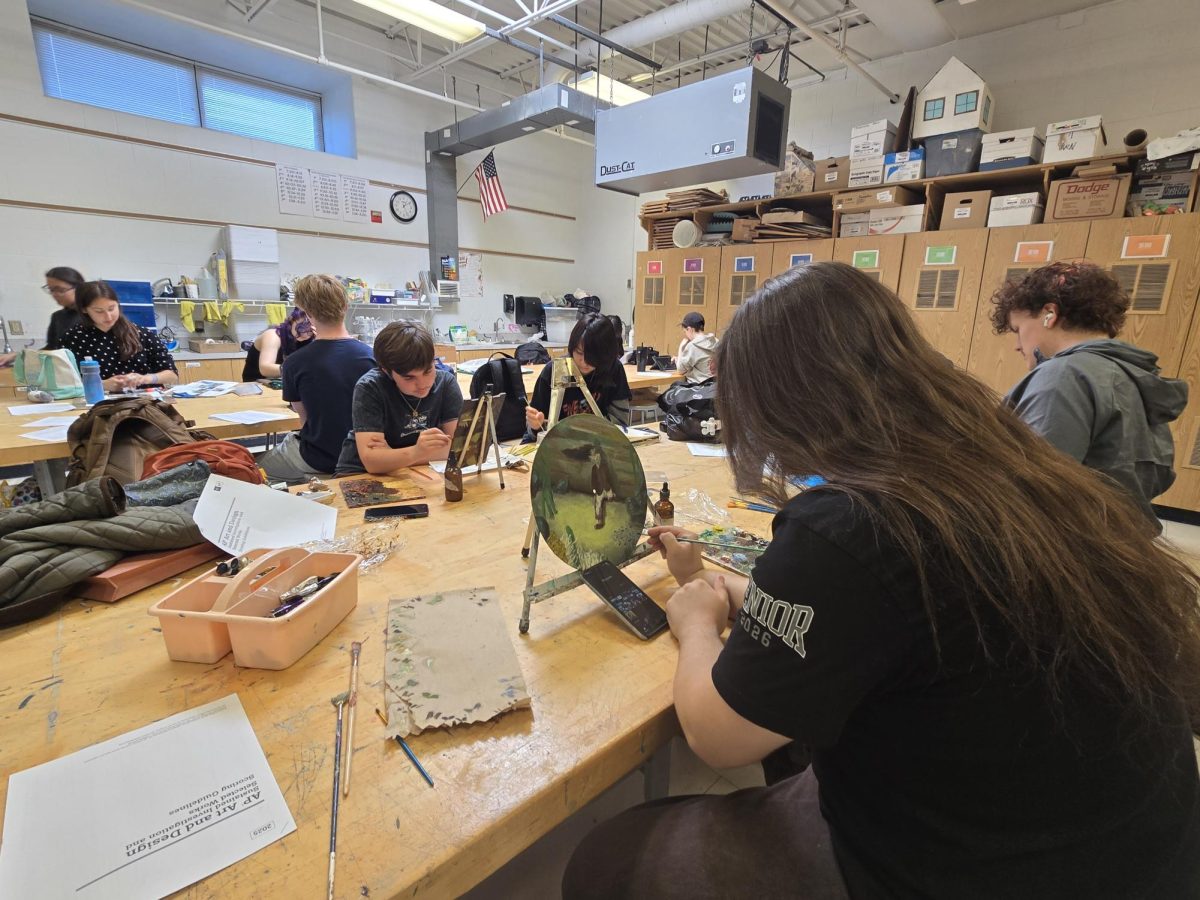
While some aspects of the class are notably different from the past, some traditions still remain the same. After the AP exam passes, students have the option to recreate a work they studied during the school year to be hung on the walls. There are two annual field trips as well: the St. Louis Art Museum and the Cathedral Basilica of St. Louis.
“[The Art Museum] is such a fun time. It’s almost worth taking the class just for that,” Cordray said.
The St. Louis Art Museum does not contain any of the exact works from the course, but upon visiting, students are greeted with almost identical representations of many of the required pieces, which helps further their understanding of the material and promotes engagement with the course.
Engagement with art history is a fundamental way to develop knowledge of the material. Not every student has a passion for art, yet most will find that there’s something that piques their interest throughout the year. For Cordray, the volume of material when it came time to study for the exam was overwhelming, yet their interest in certain pieces pulled them through to earn a four on the exam.
“The questions were about pieces that I just had memorized because I found them interesting,” Cordray said.
AP Art History is a hybrid course that’s not quite like any other AP course offered, meaning it requires a unique blend of information.
“It is a singleton type course…Not only do we talk about the more familiar pieces that some students may know, but also talk about those pieces that are unique and…really made a difference in our history of art,” McCune said. “It’s about all kinds of different cultures and religions, so we’re not just looking at the European art that is pretty traditional; we’re also understanding different cultures and how they’ve impacted art and how that has changed the way we see the world.”
Because Art History covers such a wide range of time periods, cultures, values, religions, and traditions, students have many outlets to relate to the content.
“Part of it is trying to find things in history that you really enjoy, that speak to you, things that even if you’re a science or math person, [you] can really see the value in understanding art… I don’t have illusions that you are going to love all of it, but that parts of it you can enjoy and sink your teeth into and really understand,” said McCune.