Jazz music is the culmination of the hard work of many musicians, coming together in a grand fashion and performing concerts for many to see. The school jazz band puts in the hours year-round, honing their skills to share their passion with the rest of the world. Focusing on the individual talent of each player allows directors to determine what instruments or styles excite and bore audiences in the jazz setting. In picking out the cacophonic sounds, a band can perform at its best.
Professor Rick Haydon at Southern Illinois University Edwardsville represented the excellence that came in dissecting jazz music at every level of playing. Before his recent passing, he worked as a jazz adjudicator, judging the performance of various bands. Band director Nathan Griffin met Haydon for the first time at one of these competitions. Initially, his harsh, honest feedback toward his group came across as very shocking, as he was under the impression they were doing everything to the best of their ability. However, Griffin came to learn that he was critiquing them so they would progress beyond the standard, specifically in the guitar section. Utilization of guitars was being undermined to focus on other instruments, leading to a complete reworking of Griffin’s methods for teaching guitarists.
“During a summer clinic, [Haydon] spoke to one of our jazz guitarists about how to play Latin jazz, and it was mind-blowing for me. I’d never thought about jazz guitar in that way before,” Griffin said. “That’s how I taught my jazz guitarists from then on. I call it ‘the Rick Haydon method’, since he’s the one who showed me.”
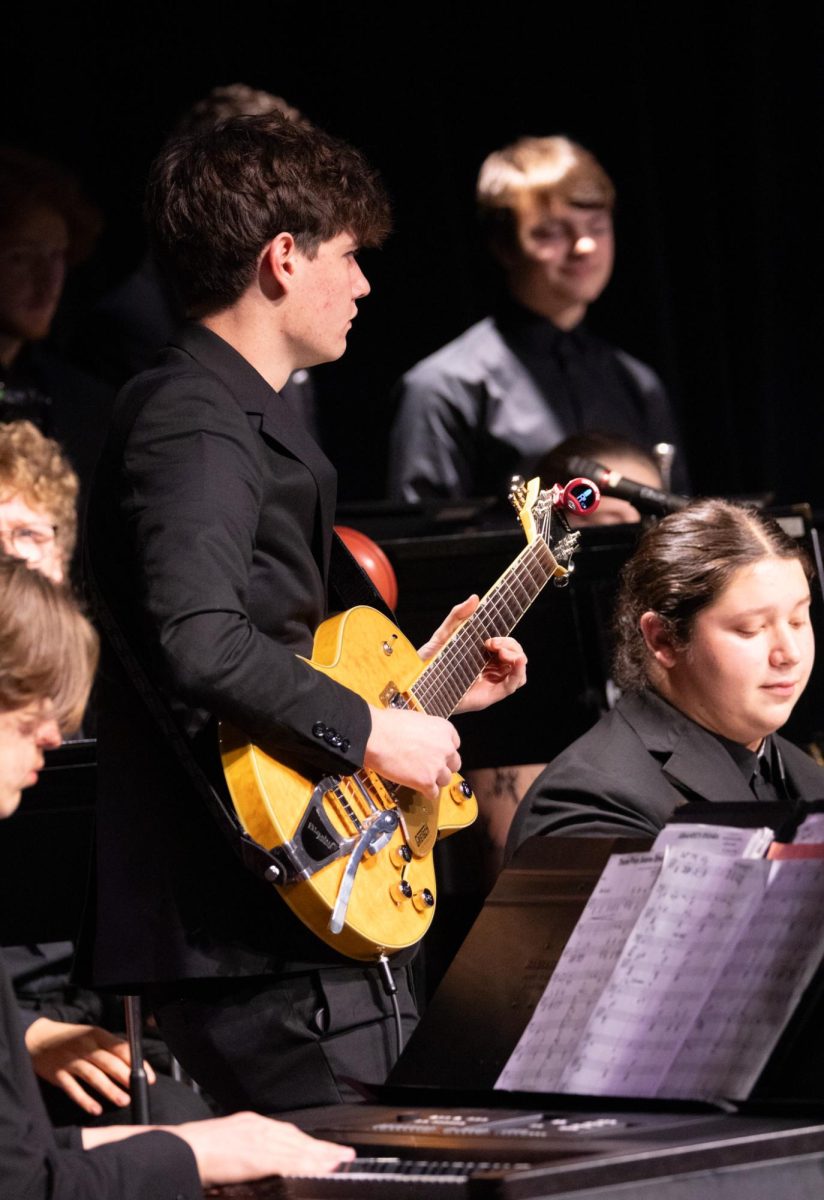
The main jazz guitarist at FHC for the past two years, senior Luke Stallings, has learned many things about his instrument through his time with Haydon. Starting to play in his sophomore year, Stallings caught the attention of Haydon at a summer clinic. Similar to Griffin, Stallings was intimidated by Haydon’s rigid critiques of his guitar playing. Over time, though, the two grew a mutual respect toward one another. Stallings became significantly more comfortable with his instrument, and his talent surpassed what it would have been without the impact of Haydon’s teachings.
“Every year, we would have at least one clinic with Haydon,” said Griffin. “All of our guitarists would talk to him, and they would become a better player soon after.”
Haydon’s impact in jazz spans far beyond being a clinician for high schoolers or a professor for collegiate musicians; as a professional guitarist himself, Haydon has made a splash in a much broader area. Dedicating his entire life to jazz, there have been many concerts he has performed in where he stood out for his mastery of the guitar. Spending many of his latter years as a teacher, though, his life’s work lies within all the guitarists he taught and inspired throughout the region, laying the foundation for an uptick in guitar’s presence in the jazz setting. This increased usage has allowed jazz to transcend traditional St. Louis jazz, changing the way bands will harmonize forever. For a legacy as powerful as Haydon’s, many are concerned with who can replace, or even compare to, the extraordinary knowledge that he had of jazz and guitarists.
“He stressed the importance of knowing the fundamentals, music theory, and memorizing chord structures,” said Stallings. “[Haydon] was the go-to guy for all guitarists in the St. Louis area, creating a bigger name for guitar in our jazz scene.”
One of the most successful and talented musicians of the graduating class, Sirr Julian Rodriguez, was profoundly influenced by Haydon. Coming into high school, Rodriguez was unsure of what he wanted to do with the rest of his life. He became deeply invested in the band, especially the jazz ensemble, and wishes to pursue music in his future. Now, as a senior, he plans to attend SIUE for its jazz program, the school at which Haydon was a music professor. While Rodriguez doesn’t play guitar, Haydon was the leader of a music group that he played in at a jazz camp at SIUE. Having this opportunity, Rodriguez grew closer to Haydon, looking up to him as a role model for his music journey.
“He reminded me of my own grandpa, giving him that father figure aspect to him,” said Rodriguez. “His deep passion for jazz inspired me to become more invested in my future as a musician.”