
On an otherwise unremarkable Tuesday, the hallway hum settles into a dissonant rhythm — the syncopation of lockers slamming, shoes squeaking, and voices harmonizing into an indistinct current of chatter. In the breath between classes and lunch, a student scrolls past a headline about an election they don’t bother to read. Another hears a teacher mention it in passing. A flyer, half-peeled at the edges, clings to a wall that remains unnoticed.
Nothing about it insists on urgency.
Amid this improvisational orchestra, the election beats, an underlying bassline—present yet easily ignored. In the Francis Howell School District, the upcoming school board election on April 7 has been a slow-building crescendo, one that will eventually dissipate into the harmonics of daily life — the policies, priorities, agendas, decisions — that contour the lived experience of students and teachers alike. What is at first a murmur in the background can, over time, become the dominant motif in the composition of school life.
For senior Nuwelin Dagne, the rhythm of this civic music is no longer abstract.
“I registered… It’s important to vote because you’re exercising your most important…right as a citizen or a resident of this country,” she said.
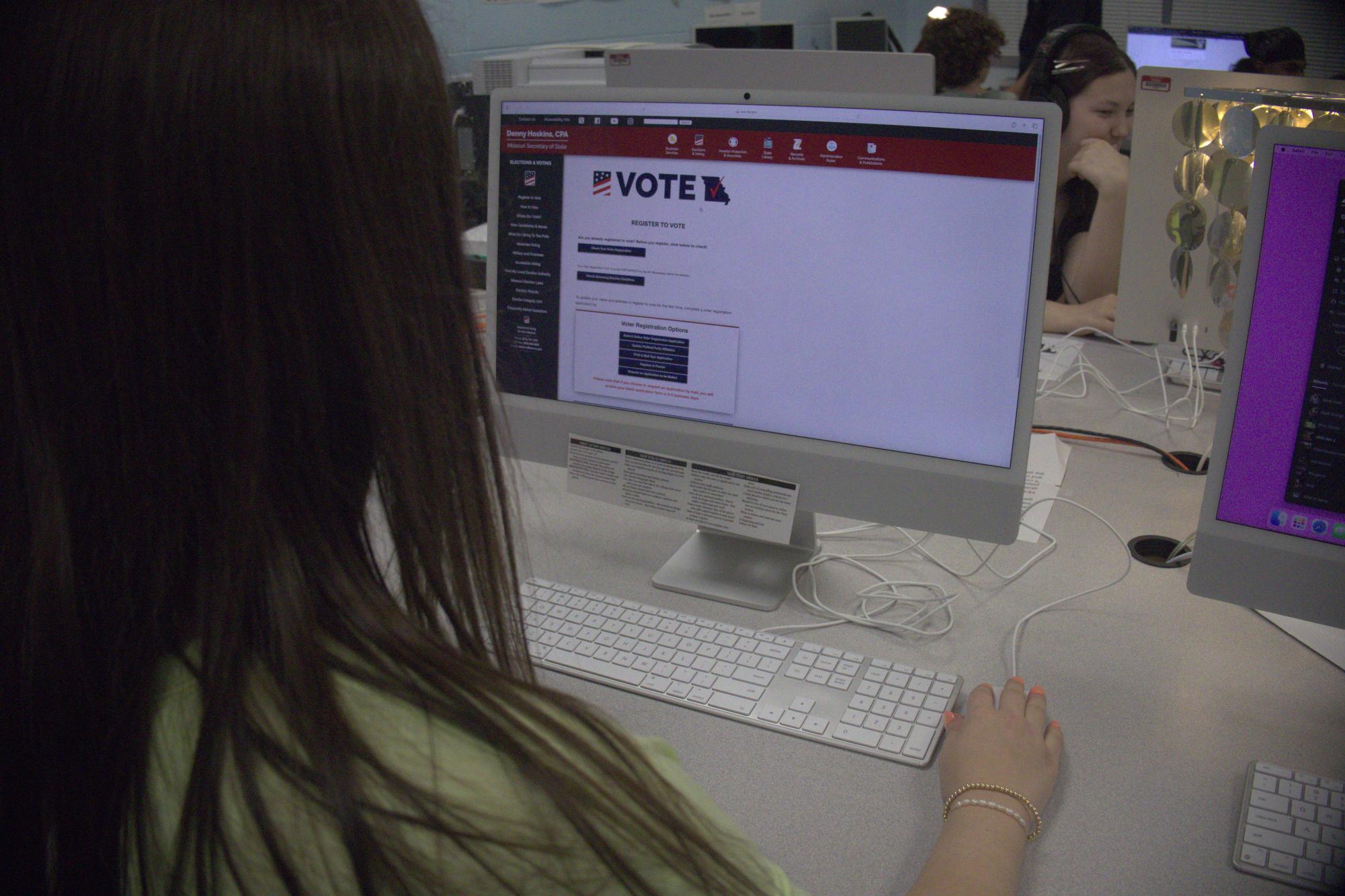
Over time, the process has become fluid, folded into the routine of a trip to the DMV for a license renewal or the abnormal metronome of a few keys tapping online. Civic participation, once an off-limits ideal glimpsed from afar by those omitted from the voting process, has now expanded to the children who have become adults today.
Yet, ease of entry is only the overture. Voting, particularly in local elections — as is the upcoming election — requires attention to the motifs that underlie policy; the nuanced interplay of curriculum, funding, and governance. These are notes that define the structure of classrooms, the tempo of learning, the resonance of student experience.
Government teacher Nick Jury uncovers the critical chord that these local elections produce.
“I think it’s the [type of] government that affects the students and the teachers the most. [T]hey are the ones that…make the big decisions for us, and they affect us in what we do in the classrooms,” he said, “it…affect[s] [students] the most, and makes the decisions that [impact] what happens in the school and in their community,”
School board members, while often overlooked by the students, are the primary orchestrators of educational life, shaping arrangements of learning and funding.
Dagne elaborates on listening to the melody of policy in her own cadence: “[I]n smaller scale elections, people are going to make decisions that really impact you…voting in local elections [is] especially important because it chooses who your children…or your siblings are going to have for leading their school and shaping their futures. And it chooses your representatives, [who] ultimately go on to fight for your rights, and it’s important to know who they are and who they’re actually fighting for,” she said.
In a world increasingly oriented towards immediacy and scale, the local can feel diminutive by comparison. But scale is not synonymous with significance.
Local elections, unlike national contests, are less about spectacle and more about nuance, producing the music of daily life. While written off as insignificant, local elections impact the average individual’s life more, lead to more widespread change, and allow citizens to have more of a hand in policy initiatives.
Yet the challenge remains in ensuring that the electorate listens carefully; that they distinguish the melodies from the cacophony.
“It’s important…to do a lot of research on your representatives, so you can know what you’re actually voting for and not just [what] people tell you or what the name of the law is and actually have background on that [issue],” Dagne said, invoking the necessity of discernment. The ballot is democratic, blind to attention or comprehension. Its integrity depends on informed participation, not just what you saw on a random TikTok clip.
The informed voter overcomes a broader issue within modern voting behavior—engaging at a surface level. Names, slogans, and ballot language often function as proxies for deeper policy positions, creating an illustration of comprehension while lacking the substance.
“[Being an educated voter] allows you to make the best decision to help not only your community, but yourself and your family,” Jury added, underscoring the gravity of participation.
An uninformed vote still counts. It still enters the aggregate. But when multiplied across a population, those small gaps in understanding can create larger gaps in outcomes, shaping policies based on image rather than intention. In this way, the electorate becomes not just a collection of voices but rather a reflection of how well those voices have been informed.
For students—particularly approaching voting age—this introduces a complicated question: when does civic engagement truly start? Sans voting rights, expectations remain to watch governmental proceedings. Awareness is a foundational component of citizenship; without it, it is like strumming a guitar with a missing string.
Even for those not yet of voting age, there is a rhythm to civic engagement; an anticipatory prelude. Awareness and attention form the first measures of participation, a preparatory movement that cultivates a more resonant electorate.
A subtle fugue of footsteps and whispers, punctuated by the sharp ring of a locker closing too quickly, the school day carries on until the dismissal bell. As the hallway continues its impromptu symphony, the undercurrent of local jurisdiction persists. A bassline weaving through the measure, waiting for attentive ears to catch its rhythm, to transpose the subtle notes into action.
The music is already playing. The question is whether anyone is listening closely enough to join in.
To be a more educated voter for the FHSD Board of Education election, read our collection “Meet the 2026 Board of Education Candidates” here