

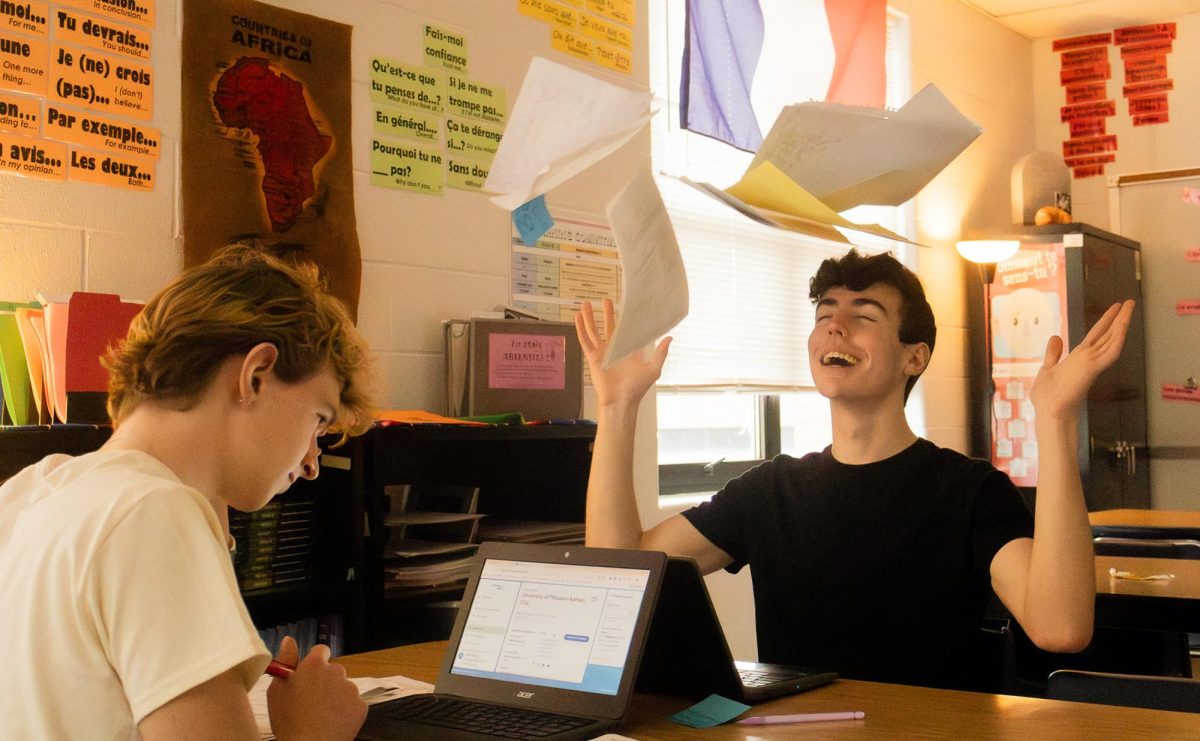
For the past four years, senior Declan Fowler has strived to do absolutely everything he can to perfect his college application. All of the extracurricular activities, AP classes, long nights spent studying, and hours practicing playing his tuba have led up to this year, culminating in a single essay and application in hopes of getting into his dream universities. Having all of his hard work be evaluated with one curated piece is a stress-inducing process, given that his future for the following years is determined by this form. Fowler’s determination in high school shines through, since he only felt immense pressure this past semester when he had to juggle all facets of his regular life, as well as writing and editing scholarship and college applications.
“In years prior, I felt as though I was pretty good at balancing all the areas of my life,” Fowler said. “When I had to do scholarships and my college application on top of marching band, E-sports, and six AP courses, I had no free time. My day would be spent almost entirely at school, only getting to go home at around 9 P.M.”
Burnout is a state of mind that many high school students find themselves in, feeling trapped within a bubble of procrastination, forever stuck pushing off assignments until the deadline. For high school students, a lot of burnout can be attributed to the academic stress from pressure to attain high grades, lack of free time due to an excess of extracurricular activities, and general perfectionism stemming from aspiring to excel in everything that a student participates in. The stress created through these causes leads to many finding themselves in the loop of burnout, inevitably being left behind.
Surviving and thriving through the darkness of burnout is a difficult task; students need to develop routines that work for themselves to see the light on the other side of high school’s demands. Junior Deepal Sharma finds that taking a nap and resting helps to wind back the clock on her burnout. In this time of relaxation, a student can attempt to focus their mind and take a step back from the harshness of school’s clamor. Another approach Sharma utilizes to avoid immense burnout is envisioning her goals and dreams, which helps motivate her to continue working tirelessly and progressing through the struggles of high school. Looking at what her life could be like at her favorite university, New York University, is an ideal method to keep her head above the waves of stress that can incapacitate a student. With one year left in high school, this goal is becoming closer to reality, however, the accumulation of stress that has built up over the years restricts Sharma’s ability to engage in volunteering opportunities and other activities that she loves to do.
“I like to look at motivational quotes or videos to lift me up when I feel bogged down by school and my clubs,” said Sharma. “I used to volunteer for National Honor Society and food banks a lot more before this year, but now I have a lot more responsibilities, and [I] have to study more for all [of] my AP classes.”
For an underclassman, like sophomore Lucas Ostermeyer, the years left ahead of him in high school, often identified as the hardest and most stressful, leave a sense of looming dread. Ostermeyer, since the beginning of high school, has participated in any and every activity that he felt even an inkling of attraction toward, attaining numerous leadership positions along the way. Having so much on his plate so early in his career means that the cycle of burnout is starting to emerge in his life. Now, nearly every other week has a plethora of events, tests, and tasks designed to stretch out his time management abilities to the extreme. Contrasting his extraordinarily busy schedule, he attempts to carve out space every Sunday for leisure, such as scrapbooking, biking, and catching up on his favorite shows. In spite of this day of relaxation, a colossal contributor to his biweekly burnout is provided to him by being friends with seniors, their struggles of college being present to him long before it is applicable to his life.
“I feel this strong pressure of what I do with my time now affects my future to such an immense degree that if I don’t do everything I can now, I won’t be able to prove that I’m worthy of attaining any of my dreams or goals,” said Ostermeyer. “This system of burnout makes everything feel so disproportionately important, to the point where I don’t feel safe to fail in any capacity of my life.”
As Fowler begins to hear back from institutions he applied to earlier in the school year, and the acceptances and rejections flow in, a slight sorrow is felt in the letter from Massachusetts Institute of Technology. Being his dream school, Fowler was made upset by this dismissal, however, his upbeat attitude remains unwavering, since he has heard positive news from a plethora of institutions, regarding both acceptances and financial aid. Above all else, having a free education was Fowler’s primary motivation in his endeavors toward higher education. Prevailing over burnout allowed Fowler’s vision for his future to be achieved.


