

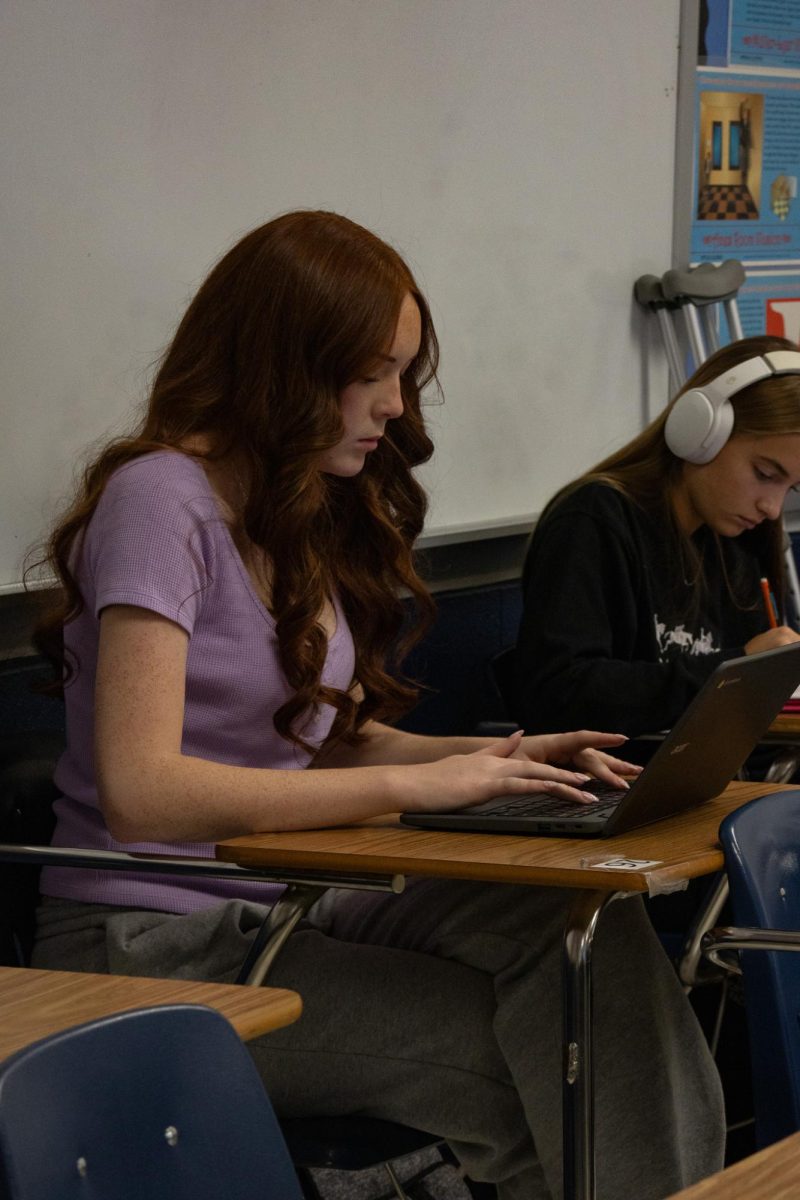
As Schedules get released, senior Jamin Whaley, a four-year AP student, sees all his friends’ schedules and accepts that he will not have any classes with them due to his heavy workload. When crafting his schedule for senior year, he didn’t prioritize/consider the social aspect of being in all advanced classes.
The schools’ advanced placement (AP) classes are designed to be more challenging than our honors programs. The AP program is designed to favor the upper-level students by presenting them with harder classes. The course ends with a lengthy exam that can stress students out, but, if they pass, it gives them college credit. In the end, all the work is worth it because of the financial difference; students would be paying thousands of dollars for a class in college, whereas the AP test costs $100. All in all, the courses, compared to the similar on-level ones, are more challenging.
AP classes promote hardworking students that take the extra mile to be successful in the class by using their time management skills. Whaley explains the difference between on-level classes and the higher-level AP classes.
“AP classes are a lot more centralized in the content, you just have to know certain things [outside of the coursework],” Whaley said.
Outside of school, these AP students are overloaded with the workload. Sacrificing their social lives for these classes shows the dedication that these students have for academics and their future, nonetheless. Junior Amelia Heidt explains the difference in socialization throughout her years of high school.
“Freshman year I had time to go to basketball games… sophomore year it got harder to balance with a job and playing a sport, especially in April and May [when the exam is],” Heidt said.
With committing so much time and effort to the school year, the AP exam measures how much you put in. Students have to pay close to one hundred dollars per exam in hopes that they will pass it. Junior Caleb Calvin, specializing in the AP business programs FHC offers, such as AP microeconomics and AP macroeconomics, says preparing for the exam is challenging.
“[On average] I study one hour a night and on weekends [I study] probably two to three hours…For the last exam, I studied for a week right before, which wasn’t smart… so definitely spread it out, watch YouTube videos on different topics, take notes on them, and make study guides for them,” Calvin said.
This year, there’s been an increase in more AP classes being blended, which is a tactic that allows students to have the opportunity for independent learning. With more AP classes becoming blended, it’s getting trickier for students, as they have to manage more work without being in class for up to 60% of the time. One big factor to this is the AP classes being taught like college classes, but there’s also an overlap with it being treated like one as well. Counselor Kris Miller explains his thoughts on blended learning classes.
“It can certainly be a big shock to some kids, because suddenly at the end of the first quarter they’re like ‘Oh crap, I’m really behind’ because they haven’t been keeping up with the work… plus, if children have the choice to pick between blended and not, they will pick the blended because of the ability to [leave campus],” Miller said.
The AP classes becoming blended leads to a more college-centered perspective due to more personal responsibility being placed on students. With being able to leave campus, they also need to maintain their workload.


