
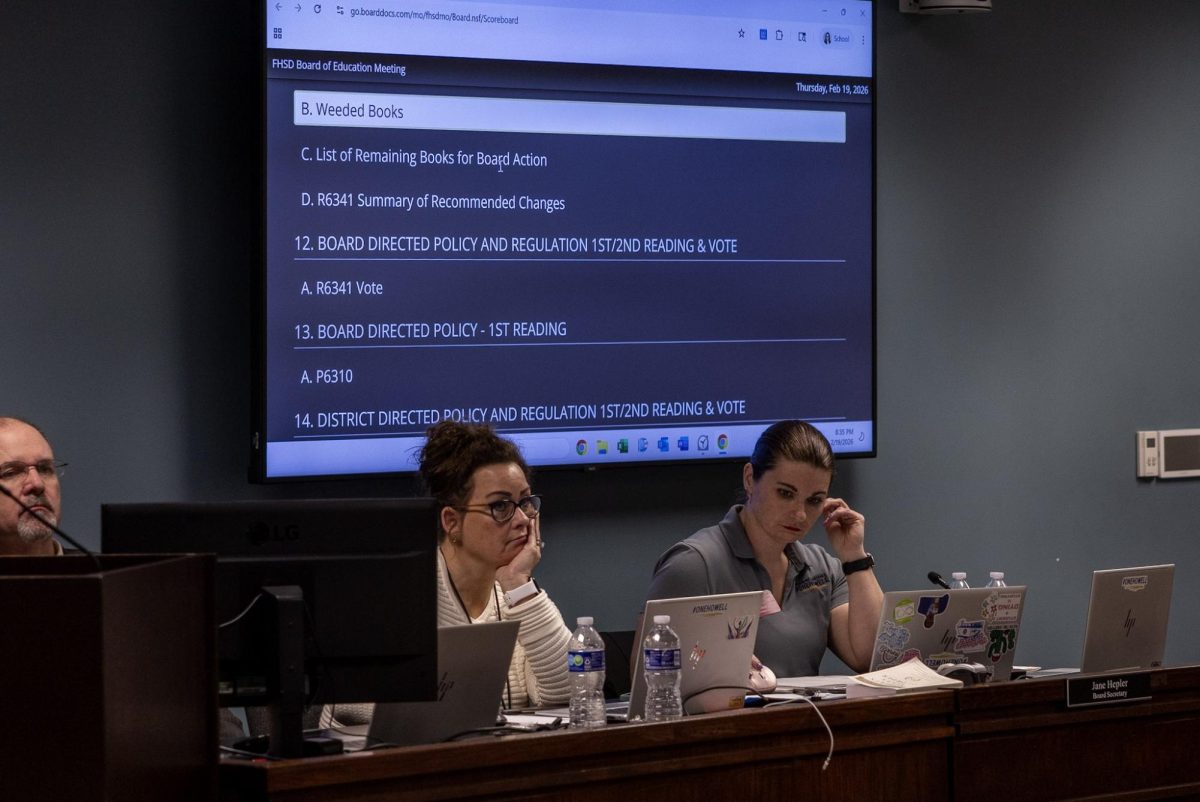
The swirling storm of controversy has made its way back to the Francis Howell School District, with the most recent book challenges being posed by a parent in the district. This challenge includes numerous titles that many of us at FHC read in any given English class. Some notable books include “Slaughterhouse-Five,” “Brave New World,” “The Handmaid’s Tale,” and others totaling up to 53; a significant amount when considering that committees must be assembled to read and review all of them in accordance with the policy.
The process of banning a book can be begun by any taxpayer in our area, as they contribute to the spending of the district and have the right to object to any idea taught within. Defending a book, on the other hand, is a much more involved process. A committee is formed of 9 volunteers, consisting of staff and parents primarily, reading and representing a book’s right to remain in FHSD libraries. Reading these books costs the district a great deal of both money and manpower, as if there are not enough books for everyone on the council to read, they must provide them; teachers or staff members on the committee are also expected to volunteer their time for this, and do not get paid.
One such teacher, English III and AP Literature and Composition teacher Sarah LaRue, embodies the inherent issues involved with book bans. Her classes utilize numerous books to teach important topics, providing lifelong reading and writing skills that depend on literary classics. Desiring freedom to teach her classes as she has for many years, LaRue staunchly opposes restricting the number of books made available to students.
“Even if our students can’t read books that contain mature topics, it doesn’t mean that those things don’t happen out in the real world,” LaRue said. “It only removes the opportunity for students to learn about those things, to learn to avoid [them]. So, I don’t think it’s anybody’s place to say what someone else can or can not read.”
Books that are brought into FHSD libraries are meticulously chosen, however, and analyzed by professionals to test whether the topics discussed are appropriate for high school students to read. Head librarian Cassie Flores handles this for FHC, ensuring that only the best books are purchased for the learning commons. Book banning undermines this responsibility, providing power to anyone in the district regardless of background. While this promotes an essence of freedom, such opinions should be enforced at home, rather than blanket all students.
“Every person is entitled to their own opinion, especially regarding their children’s education; however, the topics discussed in these challenged books prepare for a harsh world that they may enter,” Flores said. “I think that’s why it’s important for them to remain available.”
Reading allows people to learn about different cultures, different people, and different opinions. Junior Rachel Christensen feels that book banning disallows high school students from learning about these things, preventing them from ever leaving the bubble of their hometown or family. According to Christensen, students’ best option for going against this practice is to make their voices heard, to convince the school board to reconsider.
“If enough people want to read those books, then the school might make a change and unban them,” Christensen said. “Some topics are mature or hard for people to believe in; still, we need to understand each other and our beliefs.”